Guide
Dive Watches: A Buyer's Guide
What makes a dive watch a real dive watch — ISO 6425, unidirectional bezels, water-resistance ratings explained, and how to pick one for daily wear.
Quick answer: A dive watch is a water-resistant watch with a one-way rotating bezel for timing elapsed minutes and bright lume for low light. The Rosemariner is a 40mm NH35 dive-style watch rated to 100m — ideal for swimming and snorkelling, but not intended for scuba diving.
Shop Dive Watches →How to set and use it
What Makes a Dive Watch a Real Dive Watch?
Dive watches are among the most recognisable and popular watch styles in the world.
Originally designed as professional tools for underwater exploration, modern dive watches have evolved into versatile everyday timepieces worn by everyone from scuba divers to office workers.
But what actually makes a dive watch a true dive watch? Is it the rotating bezel? The water resistance rating? The rugged design?
In this guide, we'll explain everything you need to know about dive watches, including ISO 6425 certification, unidirectional bezels, water resistance ratings, and how to choose the right dive watch for everyday wear.
What Is a Dive Watch?
A dive watch is a watch specifically designed for underwater use.
Unlike standard watches, dive watches are built to withstand:
- Water pressure
- Saltwater exposure
- Temperature changes
- Physical impacts
- Low-light conditions
Most dive watches feature:
- High water resistance
- Rotating timing bezel
- Luminous hands and markers
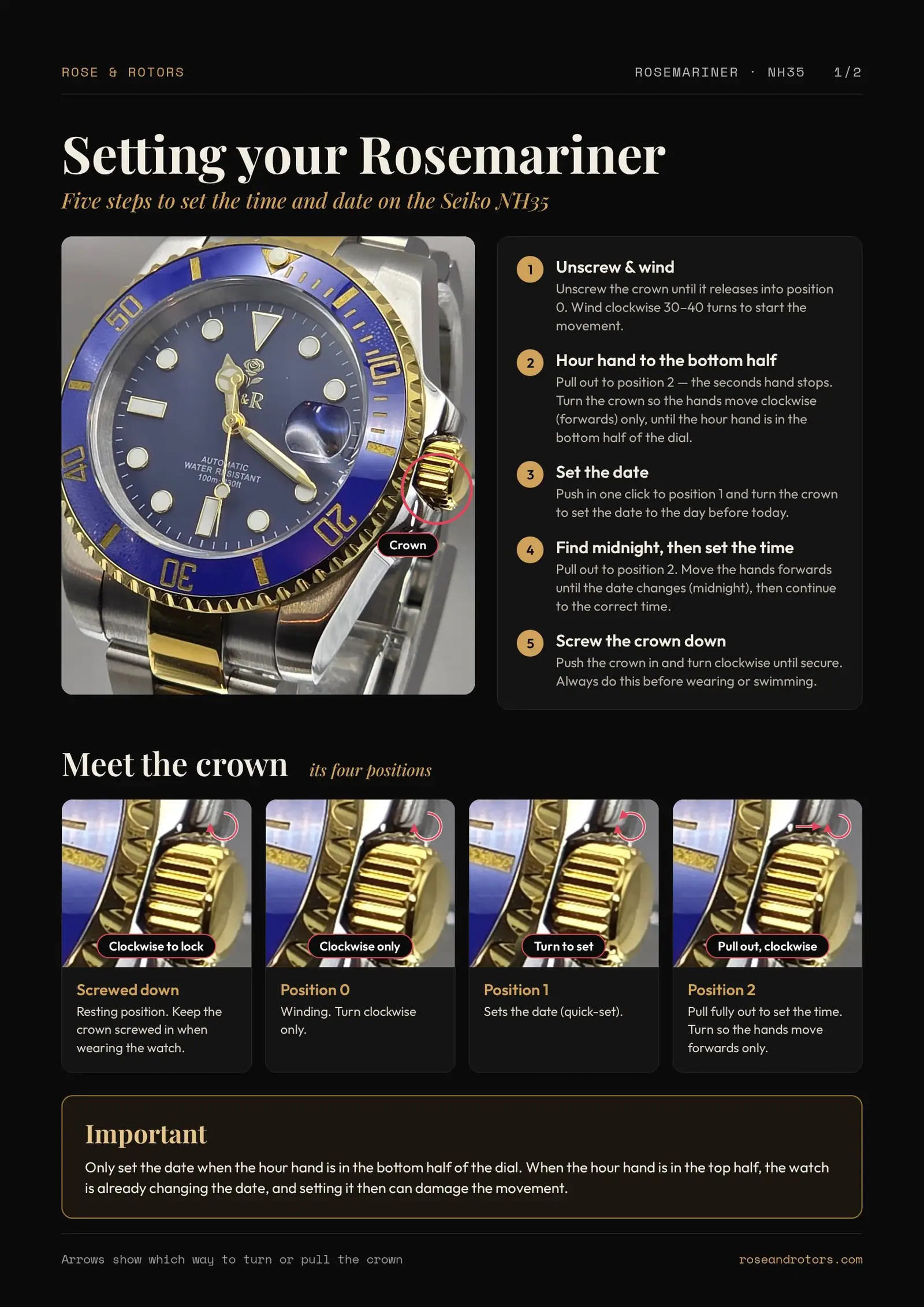
- Screw-down crown
- Robust construction
These features make dive watches exceptionally practical even for people who never intend to dive.
Why Are Dive Watches So Popular?
The simple answer is versatility.
A good dive watch can be worn:
- At work
- At the gym
- Swimming
- On holiday
- In formal settings
- As an everyday watch
The combination of durability, practicality and timeless styling makes dive watches one of the safest choices for a first watch collection.
What Is ISO 6425?
ISO 6425 is the international standard that defines what qualifies as a true dive watch.
A watch must pass a series of tests before it can officially be labelled a diver's watch under ISO standards.
These tests include:
- Water resistance testing
- Condensation testing
- Shock resistance testing
- Saltwater resistance testing
- Strap and bracelet strength testing
- Legibility testing in darkness
A watch that meets ISO 6425 requirements can be considered a professional dive watch.
Does a Dive Watch Need ISO Certification?
Not necessarily.
Many excellent dive watches are designed to dive-watch standards without undergoing formal ISO certification.
For everyday wear and recreational swimming, the most important factors are:
- Reliable construction
- Adequate water resistance
- Screw-down crown
- Good quality seals
Most owners will never approach the limits of a modern dive watch.
Understanding Water Resistance Ratings
Water resistance ratings are often misunderstood.
Many people assume a watch rated to 100 metres can safely be worn at exactly 100 metres underwater.
In reality, the ratings are based on laboratory pressure tests.
Here's a practical guide:
- 30m — Hand washing and splashes
- 50m — Splashes and everyday wear. Not for swimming.
- 100m — Swimming and water sports
- 200m — Recreational diving and most aquatic activities
- 300m+ — Professional and technical diving
For most people, 100m to 200m provides more than enough water resistance.
What Is a Screw-Down Crown?
The crown is the small winding knob on the side of the watch.
A screw-down crown creates a watertight seal by threading securely into the watch case.
Benefits include:
- Improved water resistance
- Better protection against dust
- Greater long-term durability
Most quality dive watches include a screw-down crown as standard.
What Is a Unidirectional Bezel?
One of the defining features of a dive watch is its rotating bezel.
The bezel allows divers to track elapsed time underwater.
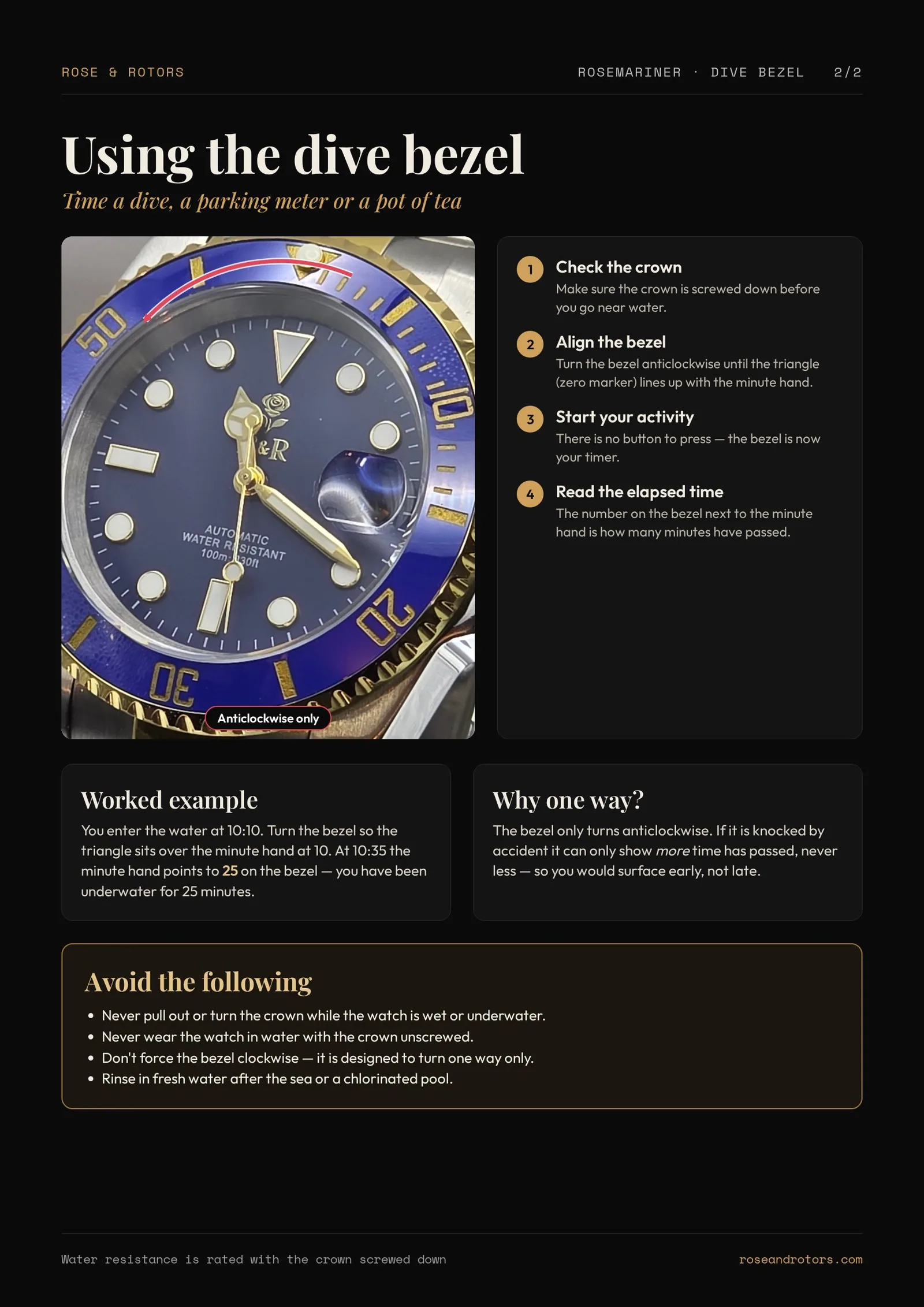
Modern dive watches use a unidirectional bezel — meaning it only rotates counter-clockwise.
Why Does the Bezel Only Rotate One Way?
It's a safety feature.
Imagine a diver sets the bezel to track remaining air supply. If the bezel is accidentally knocked underwater:
With a Bidirectional Bezel
The bezel could move in either direction, potentially causing the diver to stay underwater longer than intended.
With a Unidirectional Bezel
The bezel can only move in a way that shortens the perceived dive time, creating a built-in safety margin.
This simple feature has saved countless divers from potentially dangerous mistakes.
How to Use a Dive Bezel
Using a dive bezel is surprisingly simple.
Step 1
Rotate the bezel so the triangle marker aligns with the minute hand.
Step 2
As time passes, read the elapsed minutes directly from the bezel.
Example:
- Start: 12:00
- Minute hand reaches 20
- Bezel indicates 20 minutes elapsed
This functionality remains useful today for:
- Parking meters
- Cooking
- Exercise
- Meetings
- Timing any everyday activity
What Is Lume?
Lume refers to the luminous material applied to the hands and hour markers.
Quality dive watches use highly visible lume so they can be read in dark underwater environments.
Good lume should:
- Charge quickly in light
- Glow brightly
- Remain visible for several hours
Strong lume is one of the most appreciated features among dive watch enthusiasts.
Why Dive Watches Make Great Everyday Watches
Many people buy dive watches despite never diving.
That's because the features that make a watch useful underwater also make it useful on land.
Benefits include:
- Robust construction
- Excellent legibility
- Strong water resistance
- Scratch-resistant materials
- Versatile styling
For many enthusiasts, a dive watch is the ultimate "one watch collection."
What Movement Should You Choose?
The movement powers the watch and is one of the most important components.
For an automatic dive watch, reliability is critical.
Popular Seiko options include:
NH35 Automatic
The industry's benchmark automatic movement.
Features:
- Automatic winding
- Manual winding
- Hacking seconds
- Approximately 41-hour power reserve
Complete Guide to the Seiko NH35 →
NH34 GMT
Perfect for those who want dive-watch styling with GMT functionality.
Features:
- Automatic winding
- GMT complication
- Manual winding
- Approximately 41-hour power reserve
Complete Guide to the Seiko NH34 GMT →
Sapphire Crystal vs Mineral Glass
The crystal protects the dial.
Sapphire Crystal
Pros:
- Highly scratch resistant
- Premium feel
- Excellent durability
Mineral Glass
Pros:
- Less expensive
- More impact resistant
For most enthusiasts, sapphire crystal is considered the superior option and is highly recommended when buying a dive watch.
How to Choose Your First Dive Watch
When shopping for your first dive watch, focus on the features that matter most.
Prioritise:
- Reliable movement
- Sapphire crystal
- Stainless steel construction
- Screw-down crown
- At least 100m water resistance
- Comfortable bracelet or strap
Avoid becoming too focused on specifications alone.
The best dive watch is the one you'll enjoy wearing every day.
Common Dive Watch Mistakes
Buying More Water Resistance Than You Need
Most people never require 300m or 500m ratings. A quality 100m–200m watch is more than sufficient for everyday use.
Ignoring Comfort
A watch that looks great but feels uncomfortable won't get much wrist time.
Choosing Style Over Reliability
A dependable movement and solid construction will provide more long-term satisfaction than cosmetic features alone.
Frequently Asked Questions
What makes a watch a dive watch?
A dive watch typically includes high water resistance, a rotating bezel, luminous markers and robust construction designed for underwater use.
Is 100m water resistance enough?
For swimming, holidays and everyday use, 100m is sufficient for most people.
What is ISO 6425?
ISO 6425 is the international standard used to certify professional dive watches.
Why does a dive watch bezel only rotate one way?
A unidirectional bezel is a safety feature that prevents accidental overestimation of remaining dive time.
Can I wear a dive watch every day?
Absolutely. Many enthusiasts consider dive watches to be among the most versatile watches available.
What is the best movement for a dive watch?
The Seiko NH35 is widely regarded as one of the most reliable and durable automatic movements available today.
Explore Dive Watches from Rose & Rotors
Dive watches have earned their reputation through decades of real-world use, combining durability, practicality and timeless design.
Whether you're looking for your first automatic watch or adding another piece to your collection, a quality dive watch remains one of the most versatile choices available.
Explore the Rose & Rotors collection to discover dive-inspired watches powered by proven Seiko movements and built for everyday adventure.
Keep exploring
Frequently Asked Questions
Why does a dive bezel only turn one way?
So a knock can only make your remaining time look shorter, never longer — the safe direction.
Can I swim with the Rosemariner?
Yes. It is rated to 100m. Screw the crown fully down before entering water.
Is 100m enough for a dive watch?
For swimming and snorkelling, yes. ISO 6425 dive certification requires at least 100m and further testing; for scuba we recommend a certified dive watch.